Shout-out to Sue Robertson Danells for both this wonderful newsletter & the chance to be interviewed for the February edition. LINK
Interview with Drew Faraday
1) What inspired you to become an author?
I had the great fortune to grow up in a family where hard work and storytelling went hand in hand. As I developed a love of reading and an affinity for daydreaming while working, I naturally eased into writing. The public library was a dream come true for me as a kid, especially during the summer since I could lounge about in any number of hideouts between jobs. I discovered countless books and authors I never knew existed and frequently tried my hand at imitating a favorite style.
I continued journaling and writing fiction through public school and during college, with an occasional bit of encouragement coming my way from influential teachers and professors. At some point, I decided enough was enough and began writing fiction in earnest and plotting my course to publish some of my work one way or another.
2) Which genre are you most drawn to for writing and reading?
My reading interests range all over the map. I enjoy nonfiction as much as fiction and often have one of each going simultaneously.
The first two novels I wrote were exploratory and will never see the light of day (one was a 1st-person adventure; the other a 3rd-person thriller). I self-published my next two companion novels, both of which are mashups of speculative/dystopian/disaster/survival.
Believe it or not, in order to take a break from that troubled world of the Oregon Meltdown that I created and cultivated over the course of nearly a decade, I’m currently working on a goofball comedy.
3) How did you decide on the self-publishing route?
After each of my first two novels, I queried literary agents and publishing houses. Even though I got a few nibbles, I was left wondering what was next.
In addition, the screenplays I wrote got a bit of attention, but it was obvious from the start that social connections and proximity were going to drive that bus, particularly since I had no formal background in scriptwriting.
Self-publishing offers me the chance to control my own schedule, pick and choose projects, decide editorial issues, and learn something new almost every day.
4) How have you promoted your work and has it reaped benefits?
I’ve tried about every promotional method known to indie authors that fit into my budget. Ad platforms like BookBub and Amazon, services like BookFunnel and Fussy Librarian, and social media—lots of social media. Prior to publishing my first novel Pearl Fields and the Oregon Meltdown: A Tale of Survival, I’d avoided most social media. Times have changed for me, though, as I’m now on more platforms than I care to admit.
On a positive note, I’ve interacted with online communities and been helped along on my author’s journey in various ways by some amazingly generous individuals.
In terms of benefits, although not in a monetary way, the whole process of promoting has taught me a great deal and reinforced the notion that I can learn and understand most anything I choose—this side of the true nature of quantum physics, that is.
5) What would you say is the most satisfactory aspect of being a self-published author?
After a palpable sense of accomplishment, overcoming obstacles to self-publishing is a close second. For example, I’ve learned firsthand how to format and publish books, design creatives for ads, make reels, create and maintain a website, interact tolerably well on social media, and navigate the labyrinth of offers and platforms available to indie authors, all while still continuing to write—at least to some degree.
And when it comes to editing my own work? I’m happy to say that due in part to keeping my nose to the grindstone and relying on reference books, notably Dreyer’s English by Benjamin Dreyer, my editing skills have been honed to a level I’d never thought possible.
6) What advice would you give to authors at the start of their journey?
If I were to start all over from scratch, I’d focus on three main areas. First, I’d read as many books on how to publish as possible and pour over online sources like Lee Hall’s website and podcasts like Joanna Penn’s The Creative Penn, then seal them in a vault until my first few drafts were nailed down.
Second, I’d give a lot more time to the whole process, especially since including beta and ARC readers on my team beforehand would have been a game changer. I’d also be sure to avoid the pitfall of starting the promotional side of things in order to meet a self-imposed deadline.
Third and last, I’d enjoy the ride all over again, no matter what. Being a self-published novelist obviously fulfills some vital need of mine, so I prefer to let that unrelenting drive live wild and carefree instead of burdening it with jaded labels or hackneyed rationalizations.
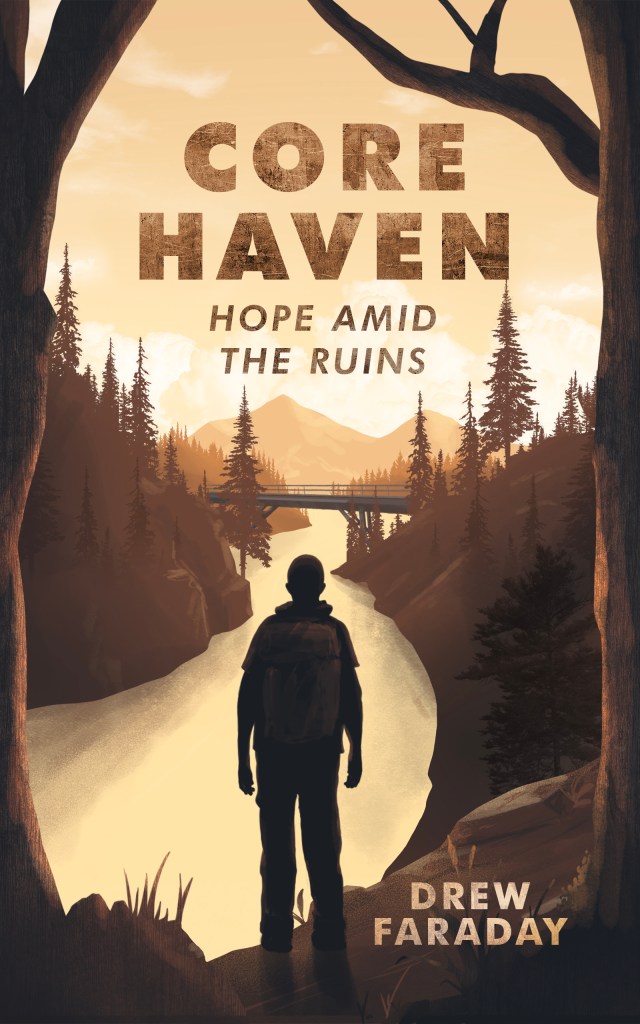
7) I’ve highlighted Core Haven for this interview. Which other of your novels would you recommend?
My suggestion would be to consider reading its companion novel Pearl Fields and the Oregon Meltdown: A Tale of Survival—with a caveat. Some people do struggle a bit with Pearl’s narrative voice, in part because of the setup I chose. After all, Pearl has been convicted of gunrunning during a declared disaster near the end of the Oregon Meltdown. She follows the military judge’s order to record her life story as part of her supplemental testimony before he determines whether she’ll be paroled, given significant prison time, or sentenced to take the long walk to the well-worn gallows right outside her jail cell window.
Some people say reading both novels in their original order—Core Haven, then Pearl Fields—helped them glean more backstory about the Oregon Meltdown from Nate’s point of view.
Of course, others have claimed the opposite since Pearl provides her own quirky, irreverent take on the events leading up to her stressful life as a river merchant surviving in a dystopian landscape.
From a writing standpoint, I thoroughly enjoyed developing a crossover character like Pearl/Sunny whose resilience in the face of overwhelming hardship pays homage to the strong-willed women I was blessed to grow up around.
Thanks to Old Crow Books Newsletter for providing this generous opportunity for me to share some of my writing journey.
Links
𝐶𝑜𝑟𝑒 𝐻𝑎𝑣𝑒𝑛: 𝐻𝑜𝑝𝑒 𝐴𝑚𝑖𝑑 𝑡ℎ𝑒 𝑅𝑢𝑖𝑛𝑠 (released 7-31-25)
𝑃𝑒𝑎𝑟𝑙 𝐹𝑖𝑒𝑙𝑑𝑠 𝑎𝑛𝑑 𝑡ℎ𝑒 𝑂𝑟𝑒𝑔𝑜𝑛 𝑀𝑒𝑙𝑡𝑑𝑜𝑤𝑛: 𝐴 𝑇𝑎𝑙𝑒 𝑜𝑓 𝑆𝑢𝑟𝑣𝑖𝑣𝑎𝑙
Till my next post a fortnight from now.
Drew
Latest review of Core Haven: Hope Amid the Ruins, 2-9-26
P.S. At the time of this writing, Core Haven: Hope Amid the Ruins has maintained its 4.8 out of 5 with 52 global ratings & 50 customer reviews on Amazon, along with 4.62 out of 5 with 132 ratings & 121 reviews on Goodreads. Not too shabby, right?

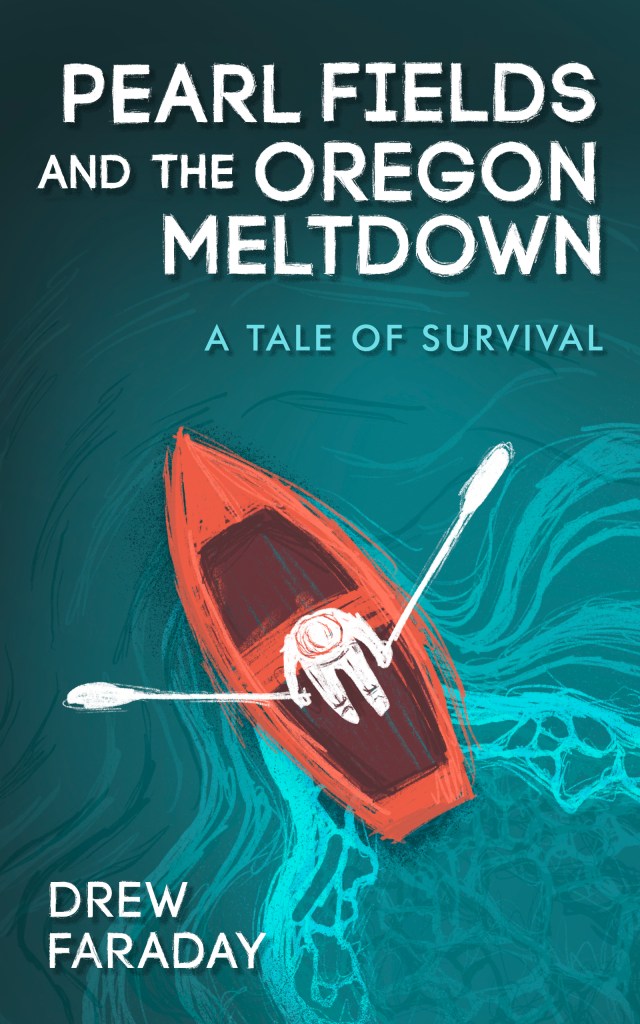
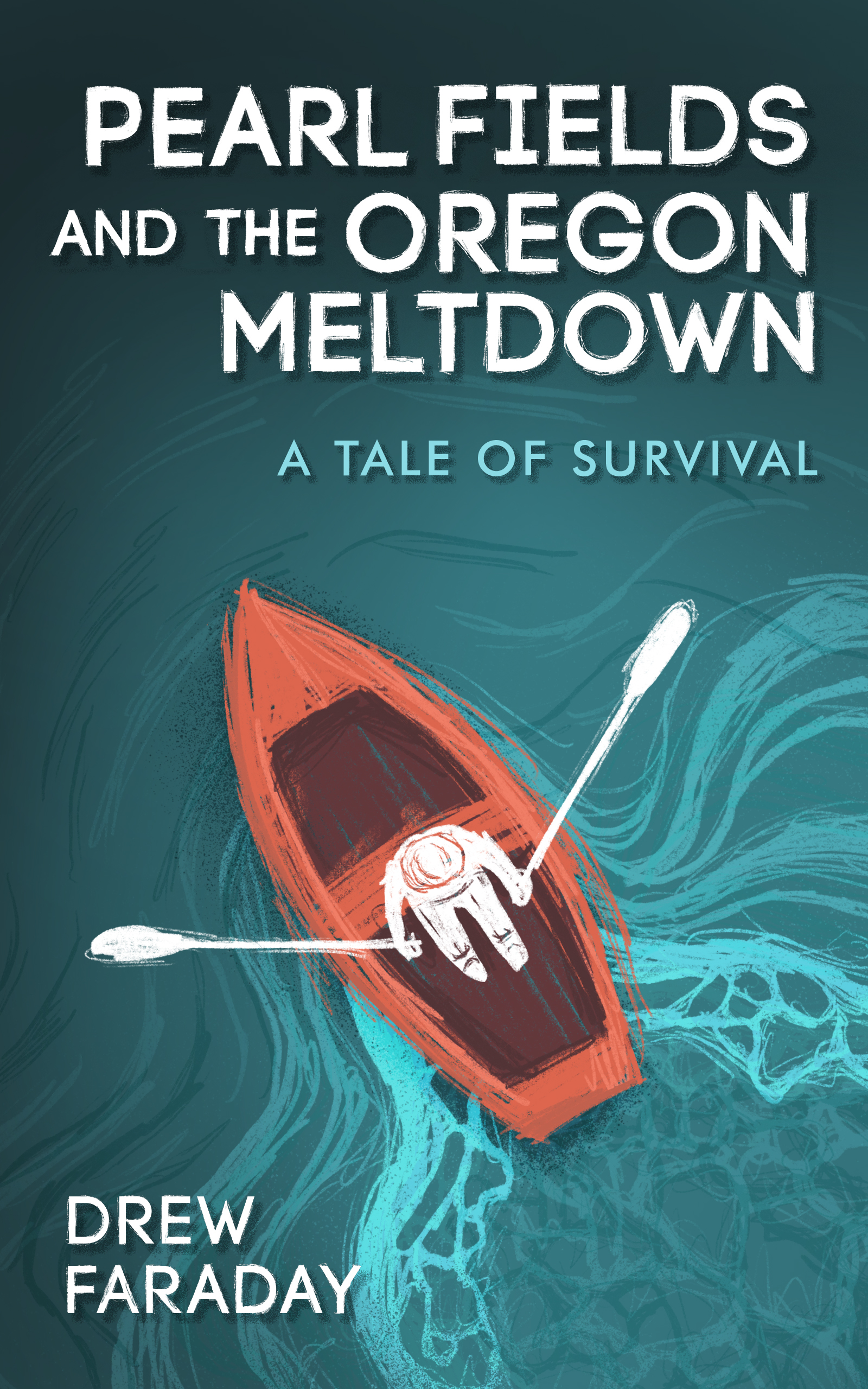
My first self-published novel, Pearl Fields and the Oregon Meltdown: A Tale of Survival, is currently available on the Kindle Store.
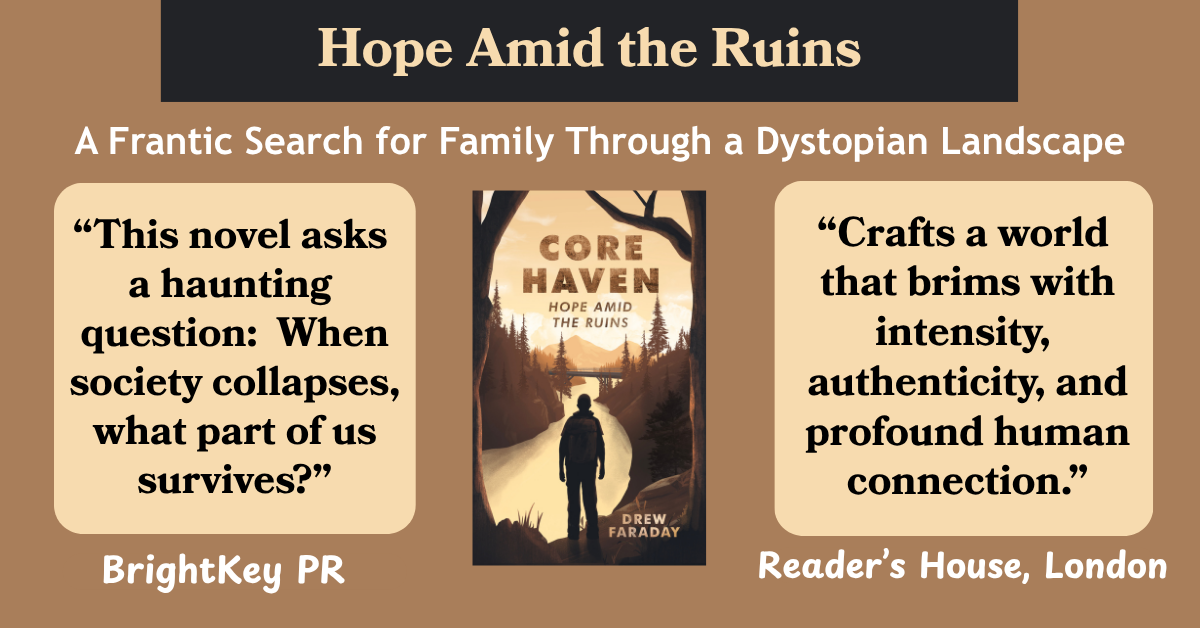
My companion novel, Core Haven: Hope Amid the Ruins, was released on July 31st, 2025. Available now.
